
PTFE, best known by the Chemours brand name Teflon, is the non-stick, heat-resistant surface on heat sealers, band sealers, shrink wrappers and screen-printing dryers. This guide sets out the five Fortis Industrial PTFE products by thickness, colour, temperature and use.
What is PTFE?
Polytetrafluoroethylene, or PTFE, is a synthetic fluoropolymer: a plastic built from carbon and fluorine atoms, which makes it very stable. It has very low surface energy, a measure of how strongly a surface grips whatever touches it, so hot film and molten adhesive cannot grip it. It also has a low coefficient of friction, so the web, the continuous sheet of film or paper running through the machine, slides over it rather than drags.
All five products share the same non-stick, heat-stable surface. What differs is the backing, whether there is adhesive, and whether it comes as a sheet, a tape or an endless belt. PTFE Belt is the joined, running belt; PTFE Cloth is the flat sheet you cut. Start with the table.
Which PTFE product do I need?
Find the job in the first column, then read across.
| Job on the line | Use | Why |
|---|---|---|
| Heat sealer jaw cover | PTFE Cloth Tape without liner | No liner to peel, straight on the jaw |
| Heat resistant masking | PTFE Cloth Tape with liner | Liner keeps the adhesive clean |
| Heat resistant electrical insulation | PTFE Cloth Tape with liner or PTFE Film Tape | Both are listed for electrical insulation |
| Wrapping steel rollers | PTFE Cloth Tape without liner | Tough cloth, up to 0.30 mm |
| Wrapping silicone rubber or rubber pressure rollers | PTFE Film Tape | Thin smooth film, rated to 300 °C |
| Continuous band sealer | PTFE Belt | Joined endless belt to your dimensions |
| Shrink wrapping conveyor | PTFE Belt | Endless belt, low friction face releases hot film |
| Screen-printing dryer | PTFE Cloth | Plain sheet, widest thickness choice |
| Adhesive interlining belt (garment fusing press) | PTFE Cloth | Glass cloth, releases cleanly |
| Side band sealing and shrink film packaging | PTFE Cloth | Flat cloth, cut to size for covers and linings |
Why PTFE belongs on a hot line
Wide working temperature
Every product is rated to at least 260 °C. PTFE Film Tape goes to 300 °C. Full ranges are in the spec below.
Non-stick release
Low surface energy means hot film and adhesive let go instead of building up on the jaw, belt or roller.
Low friction
A smooth PTFE face slides. Film tape and belt reduce friction, rattle and machinery noise.
Resists moisture and contamination
PTFE Cloth resists weather, moisture and contamination.
Heat sealing: covering the sealer jaw with PTFE Cloth Tape
The sealing jaw of an impulse heat sealer (a sealer that heats only for the moment of the seal) is one of the first places PTFE goes. Without a cover, molten film bonds to the hot metal, seals tear and the jaw needs scraping. A layer of PTFE Cloth Tape gives the jaw a non-stick, heat-stable face. The tape is PTFE cloth with a heat-resistant silicone adhesive on one side.
Roller wrapping: cloth tape for steel, film tape for rubber
Rollers pick up adhesive and dust and pass it on to the web. Roller wrapping with PTFE gives the roller a face that releases cleanly and lets the web slide. A steel roller takes PTFE Cloth Tape without liner. The cloth backing is tough and goes on straight from the roll. A silicone rubber or rubber pressure roller takes PTFE Film Tape. The film has no cloth inside, so at 0.08 mm or 0.10 mm it follows the roller and adds almost no bulk.
The five Fortis PTFE products
Five products, in the order of the Fortis PTFE Assortments range. The two cloth tapes have one side chemically treated so the adhesive can bond; the FAQ explains why. Widths, lengths and belt dimensions are cut to order.
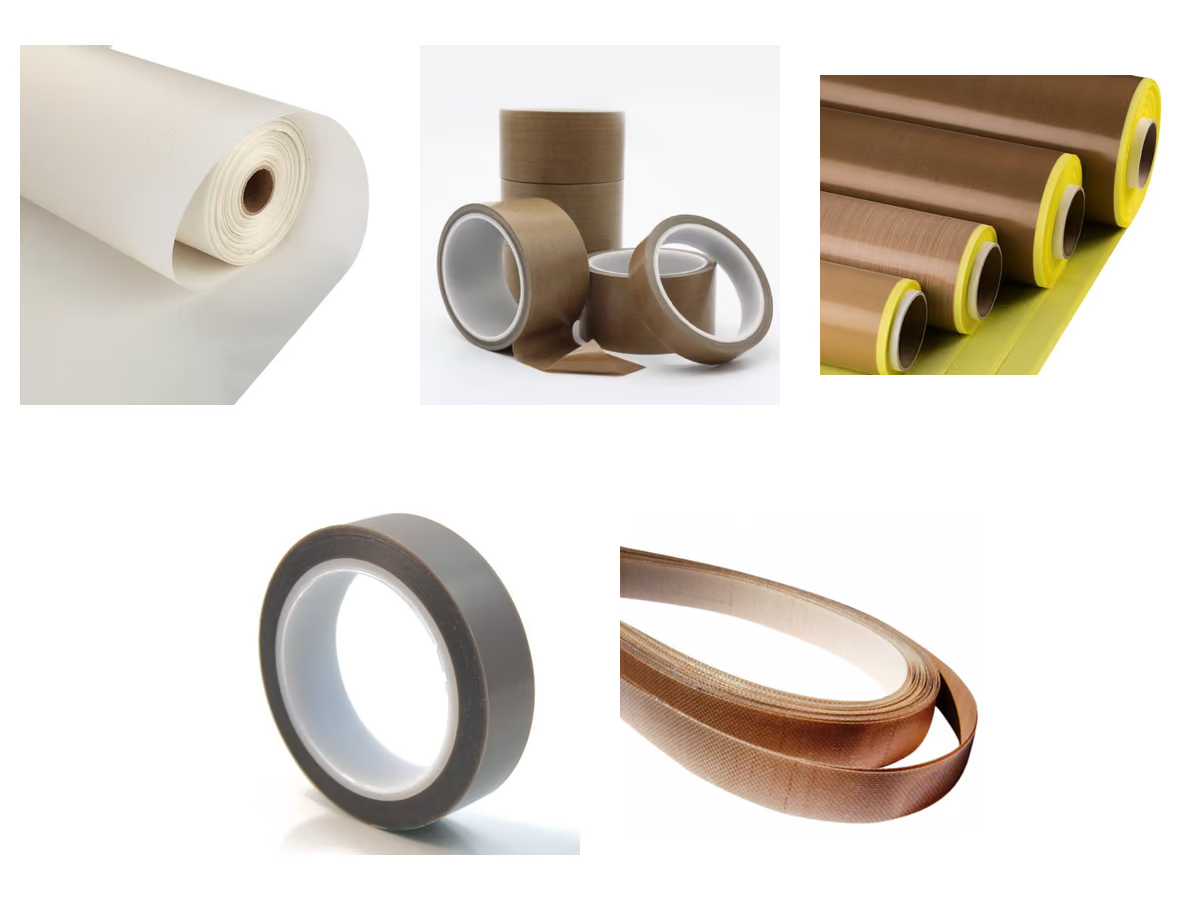
PTFE Cloth
Woven glass cloth backing impregnated with PTFE, supplied as a sheet rather than an adhesive tape.
- Thickness
- 0.10 mm · 0.13 mm · 0.15 mm · 0.18 mm · 0.20 mm (rough surface, brown) · 0.25 mm (white)
- Colour
- White, Brown (available upon request)
- Temperature
- −100 °C to 260 °C
Used for
- Drying screen-printing machines
- Adhesive interlining belts
- Heat sealers
- Shrink film packaging and side band sealing
Characteristics
- Resists weather, moisture and contamination
- Durable
- Heat resistant for continuous use
Best for: Pick PTFE Cloth for a flat non-stick sheet cut to the size of your dryer or interlining belt.
View PTFE Cloth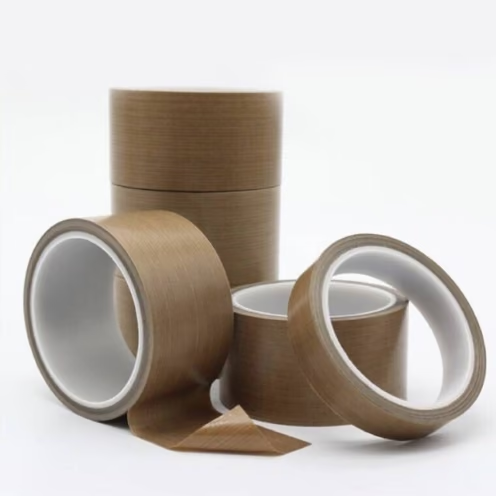
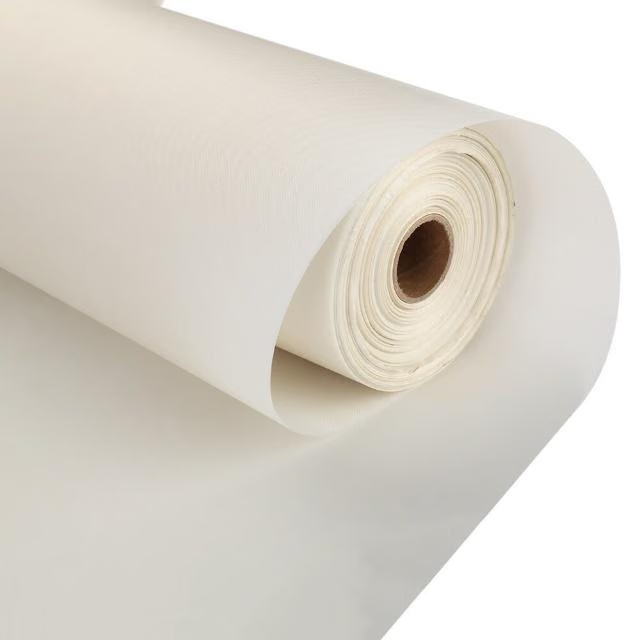
PTFE Cloth Tape W/O Liner
W/O means without. PTFE cloth, treated with sodium or a special reagent on one side, then coated with silicone adhesive. No release liner.
- Thickness
- 0.13 mm · 0.18 mm · 0.30 mm
- Colour
- Brown
- Temperature
- −70 °C to 260 °C
Used for
- Heat sealing
- Roller wrapping
- Anti friction (a low-drag sliding surface)
Characteristics
- Weather, fire and UV resistant
- Stable in high temperature
Best for: Pick this tape for wrapping steel rollers and covering sealer jaws straight from the roll.
View PTFE Cloth Tape W/O Liner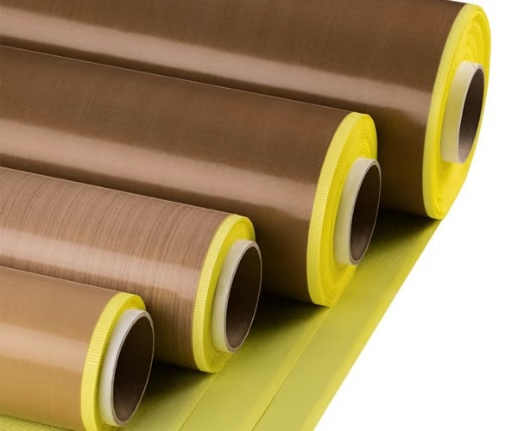
PTFE Cloth Tape With Liner
PTFE cloth, treated with sodium or a special reagent on one side, coated with silicone adhesive and backed with release paper.
- Thickness
- 0.13 mm · 0.18 mm · 0.25 mm
- Colour
- Brown
- Temperature
- −70 °C to 260 °C
Used for
- Heat sealing
- Heat resistant masking
- Heat resistant electrical insulation
Characteristics
- Weather, fire and UV resistant
- Stable in high temperature
- High insulation, anti-ultraviolet, anti-static
- Surface smooth, non-stick and easy to clean
Best for: Pick this tape for masking, insulation and cut pieces where the adhesive must stay clean until placed.
View PTFE Cloth Tape With Liner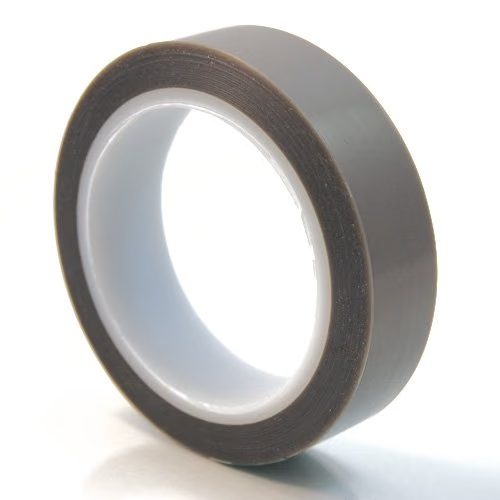
PTFE Film Tape
PTFE film backing, extruded as one continuous thin film, with silicone adhesive. No cloth, so it is thinner than the cloth tapes, with a smooth low-friction face.
- Thickness
- 0.08 mm · 0.10 mm
- Colour
- Grey, Red
- Temperature
- −70 °C to 300 °C
Used for
- Roller wrapping (silicone rubber roller)
- Heat sealing
- Heat resistant electrical insulation
Characteristics
- Smooth surface with low friction coefficient
- Clean release from its low surface energy
- High strength and abrasion resistance; reduces friction, rattle and machinery noise
Best for: Pick PTFE Film Tape for silicone rubber and rubber pressure rollers, or where the hot surface goes above 260 °C.
View PTFE Film Tape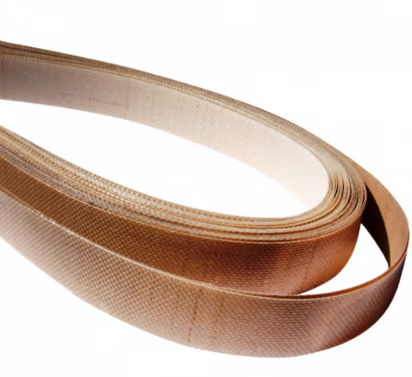
PTFE Belt
A conveyor belt of fabric coated or impregnated with PTFE, joined as an endless belt to your dimensions.
- Thickness
- 0.16 mm · 0.24 mm
- Colour
- Brown
- Temperature
- −70 °C to 260 °C
Used for
- Shrink wrapping
- Heat band sealing
Characteristics
- Smooth surface with low friction coefficient
- Clean release from its low surface energy
- High strength and abrasion resistance; reduces friction, rattle and machinery noise
Best for: Pick PTFE Belt when the machine needs a running belt rather than a wrap: band sealers and shrink wrapping lines.
View PTFE Belt
Where each product goes: photos from the line
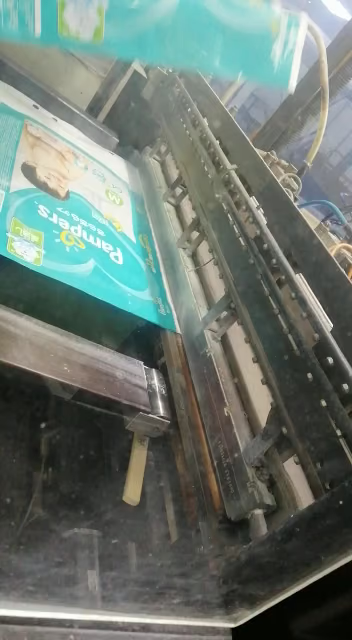
Heat sealer jaw covered with brown PTFE Cloth Tape so hot film does not bond to the metal. 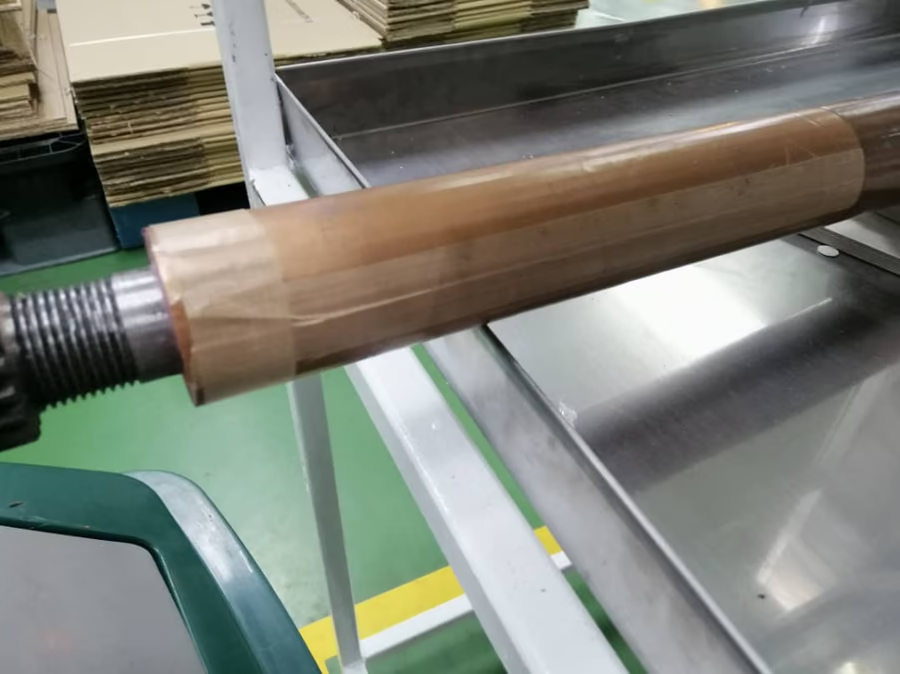
Steel roller being wrapped with brown PTFE Cloth Tape without liner. 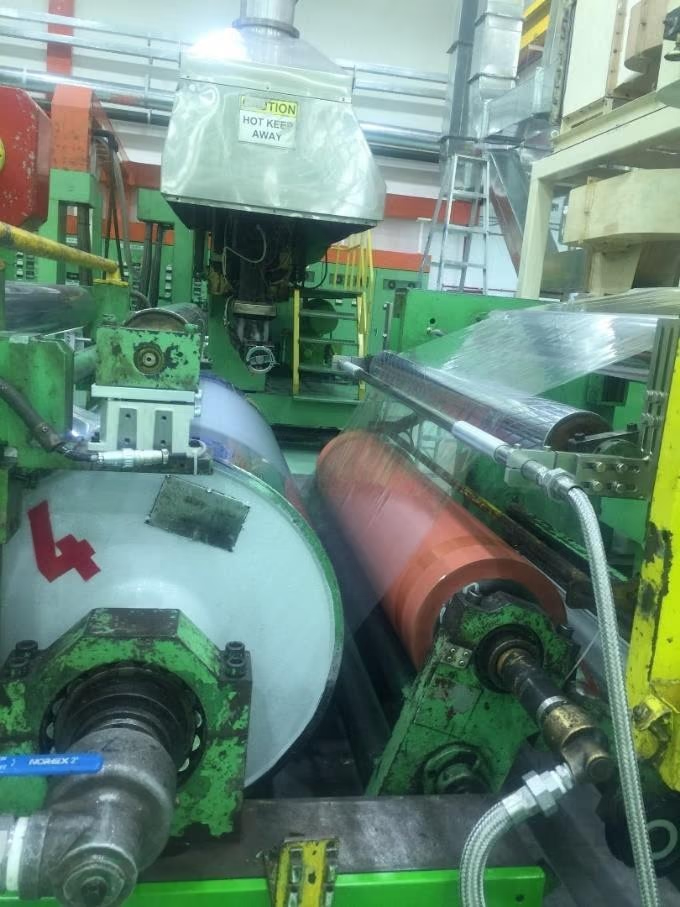
Press pressure rollers wrapped in PTFE Film Tape, the choice for rubber and silicone rubber rollers. 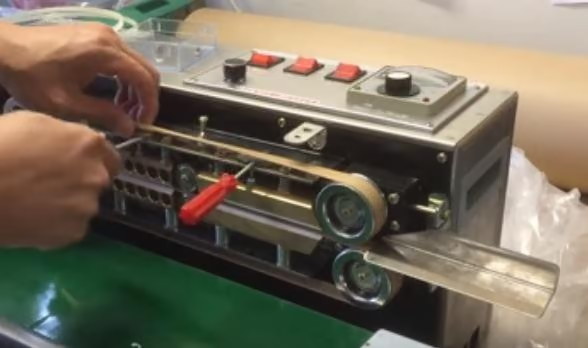
Continuous band sealer running on a brown PTFE Belt. 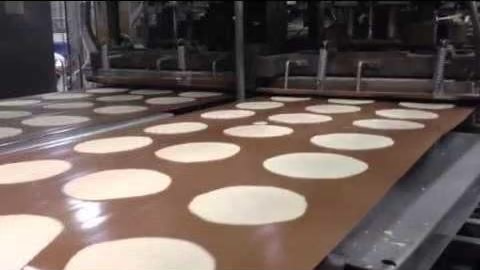
A conveyor belt faced with PTFE Cloth: product travels over the non-stick surface without bonding to it.
With liner or without liner?
Option A: Without liner
The adhesive is exposed on the roll. Unwind and press the tape straight onto the roller or jaw. It is the fastest choice for long wraps and full jaw covers.
Option B: With liner
Release paper covers the adhesive. Cut pieces to shape, position them and peel the paper off last. It suits masking, insulation and small precise pieces.
Branded alternative: tesa® 4820 and tesa® 4830
If your plant standardises on branded tape, Fortis stocks tesa® 4820 and tesa® 4830 alongside the Fortis PTFE range. Both are branded single-sided PTFE tapes with silicone adhesive for high temperature, release and abrasion applications. Ask for either by name.
Ordering checklist
- Machine type: heat sealer, band sealer, shrink wrapper, roller, dryer.
- Product type from the table, or a photo of the current part.
- Thickness in mm from the options listed.
- Width and length, or full belt dimensions for PTFE Belt.
- With liner or without liner for cloth tape.
- Colour where a choice exists: white or brown cloth, grey or red film tape.
- Set temperature of the hot surface, and quantity.
Questions buyers ask
Is PTFE tape the same as Teflon tape?
In material terms, yes. PTFE is the chemical name; Teflon is the Chemours brand name by which it is best known. Fortis PTFE products are not Teflon-branded, but they are PTFE and do the same jobs.
Cloth tape or film tape: which do I need?
Cloth tape has a woven glass cloth inside, so it is thicker and tougher and suits steel rollers and sealer jaws. Film tape is a plain PTFE film with no cloth, so it is thinner, with a smooth low-friction face, and suits rubber and silicone rubber rollers. It is also the only product rated to 300 °C.
Can I get a belt made for my band sealer?
Yes. PTFE Belt comes in 0.16 mm and 0.24 mm, in brown, and belt dimensions are made to order. Send the belt width and overall length, or the make and model of the sealer.
Why does the spec say one side is treated with sodium?
Nothing sticks to PTFE, including the adhesive you want to put on it. On the two cloth tapes, a chemical treatment (sodium or a special reagent) changes one face so the silicone adhesive can bond. The other face is left untouched, so it stays fully non-stick.
Why does the tape need a silicone adhesive?
The tape lives on a sealing jaw or heated roller. Ordinary adhesives soften and let go at those temperatures; silicone adhesive keeps holding. PTFE Cloth and PTFE Belt are supplied as sheet and belt, not as adhesive tape.
Also in the Fortis range
PTFE sits alongside the other tapes and machine consumables Fortis supplies to packaging and printing lines in Malaysia.
Also see: the PTFE products in this guide
The five PTFE products in this guide, plus the tesa® 4820 and tesa® 4830 branded PTFE tapes stocked alongside them.
Request a quote for PTFE tapes, cloth and belts
Send the machine type, the product you have in mind, thickness and dimensions. For cloth tape say with or without liner. Fortis replies within one working day with sizes, stock position and pricing.
Prefer paper? Download the flyer (PDF, 825 kB).